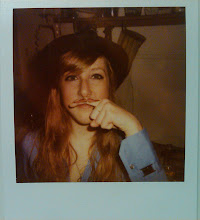
It would be very glamorous to be reincarnated as a great big ring on Liz Taylor's finger.
- Andy Warhol


RIP, to one of the all time greats.
I shall wear some all-over sequins and enormous cocktail rings in her honor.

 young Grace, American Vogue
 styled by Grace, American Vogue, Spring '11
 Not gonna lie, I'm marginally obsessed with Rihanna. I love that she rocks red hair, knows how to wear elaborate hats, and stays classy while sporting midriff-baring bandeau dresses and singing a song about bondage. Girl knows how to work it but isn't too self-aware, which is rare in someone of her pop-culture caliber. When rumors began to circulate a few months back that she was to cover American Vogue I was pleasantly surprised, and now that the photos have surfaced I'm downright ecstatic. The cover itself is gorgeous (the flaming locks! the transparent dress!) and the Annie Leibovitz-shot spread does not disappoint. It's typically pretty, as is the Vogue way, but her raw sensual power shines through; I love the lone shot of her wine-colored lipstick snarl. To be honest, she probably would have been a better feature for their Power issue, but Shape works well anyway, especially when she's twisted into a pretzel in a banded Leger suit. Way to go, Vogue, for finally stepping outside your Blake Lively box


 Harper's Bazaar, circa maybe 2007?
 Marc Jacobs
 Diana Von Furstenberg
 Dolce and Gabbana
 Steven Alan
 What Goes Around

So once said the infamous Coco Chanel of her fellow craftsman, the inimitable Cristobal Balenciaga. High praise coming from perhaps the most famous womenswear designer of all time. Yet it was not only Chanel who believed Balenciaga to be superior – he is widely considered to be the master of haute couture, even overshadowing the great Christian Dior and far surpassing Coco. His adroitness was astounding, creating new fabric and forms and revolutionizing the entire concept of one-of-a-kind clothing. To look at a Balenciaga archive is to see at once an architect’s attention to form, a jewelers eye for the exquisite, and a curators understanding of paint and palette. To those who care to see that much from clothing – and we exist in number, I can assure you – these things are near general knowledge.
However, what’s frequently overlooked is how deeply rooted Balenciaga was to his Spanish heritage, for, as many are ignorant of, he was an import of the Basque region of Spain. This past fall, Hamish Bowles, Vogue’s European Editor-at-Large and long time Balenciaga fan and collector, decided to cull his great knowledge of the legendary designer’s work to demonstrate the direct inspiration of Spanish culture on the couturier’s life. The resultant exhibit, titled Balenciaga: A Spanish Master, debuted at the Museum of Queen Sofía on November 19th (it runs through February 19th) and features a juxtaposition of Balenciaga’s works alongside historical information, traditional costumes, and artwork representing various areas of Spanish culture. The exhibit was particularly enthralling for me, having just returned from a semester in Spain, and I was amazed to find just how enormous the parallels were when one looked closely enough. And though I am perhaps slightly more appreciative of the minute cultural details, the exhibit is wonderfully curated and features plenty of background for those without any prior knowledge of Spain.
Spanning three floors, the exhibit begins in the basement with a room dedicated to the classic Spanish elements: southern bullfighting and flamenco dancing, and niche styles from Balenciaga’s own Basque country. While Balenciaga was not Andalusian, it is near impossible to be Spanish and not adore the intricate flamenco and bull-fighting costumes. Balenciaga himself disliked the blood sport but loved the ‘trajes de luces’ (suits of light) worn by the matadors and designed small beaded boleros and bowed hats for women to mirror them. There is also a row of exuberant dresses, bold, colorful, with ruffles that seem to move of their own to the Spanish guitar playing above. The master of the frilled dress, Hubert Givenchy, was a former protégé of Balenciaga’s and took from him the impressionable words, “A ruffle must be intelligent”. This is displayed in a dress whose skirt is folded upwards into the waistline, cascading down like a train; it comes from the Basque fish markets, where women used to tuck their skirts up as makeshift aprons for purchases.
The Basque region, with its quiet fishing villages, is far different from the vibrant south of Spain and sartorially distinguished by elaborate black mourning clothes and use of cotton linen as an everyday clothing material. Displayed are two-piece black suits, dated 1953, with wide short sleeves and boxy yet loose frames, indicative of the revolution in form that Balenciaga’s tailoring inspired and which overtook Christian Dior’s ‘New Look’ that had dominated womenswear since 1947. Where Dior’s woman was dainty, restrained by wasp-waisted A-line skirts and collared jackets, the Balenciaga woman was a commanding and modern presence who could move freely in her clothing, both literally and stylistically. This is perfectly exemplified by a V-neck cotton linen shirt – the shirt whose 1953 Harper’s Bazaar feature put Balenciaga on the map – with wide-set armholes and triangular insets that freed the chest, allowing movement yet with precise tailoring that kept a flattered womanly form. It is elegantly clean; Carmel Snow, then-editor of Bazaar, wrote of Balenciaga’s accompanying collection: “Nothing is so mysterious as simplicity. [Balenciaga’s work] will sink deeply, noiselessly, until it pervades the world of fashion”. She was, of course, absolutely correct. The Balenciaga form became the new silhouette and took a place in the foundation of modern fashion.
The first floor room is modeled after the cathedral of San Sebastian, the Basque region’s major city, and is devoted to the dual nature of Spain’s pervasive Catholicism. The church had an extreme contrast between severe austerity and extravagant luxury, which Balenciaga interpreted through both plain wool capes and coats and highly beaded frocks. There is a small picture of a brown-cloaked monk alongside the most lovingly draped cape I have ever seen. Its beige wool pleats down the arms like rounded armadillo plates, yet seems as weightless as the pictured hooded sackcloth. Against a church-interior backdrop stand a black buttoned dress and wide red caped coat; they uncannily resemble their inspirations, a priests and cardinals traditional vestments, respectively. They are neither stiff nor staid, revealing Balenciaga’s true mastery: few can turn a Catholic priest into couture.
The second side of the room features Balenciaga’s modernist works. Deeply inspired by Miró, he began to experiment with forms using gazar, a stiff silk gauze invented for him by a Swiss fabric house that allowed for sculptural forms with minimal sewing. I am spellbound by the infamous dress whose picture prefaced the exhibit – it is a black, crepe, floor-grazing column with a gazar ‘wrap’ that envelops the head, neck, and upper torso in a frothy bubble. It’s the most amazing creation I’ve ever seen, and I’d be breathless if I wasn’t sighing deeply in appreciative ecstasy.

Upstairs are several Irving Penn photographs of famous pieces, along with archived magazine coverage of the designer, a wall smattered with quotes about the Balenciaga work ethic and atelier, and a flat-screen showing several collections from the late 60s. It is a nice culmination, especially seeing the clothing in motion on the models - despite the perceived heaviness of wool or gazar, the models glide and turn with complete unrestrictiveness
Perhaps the most extraordinary part is the lasting modernity of his works; most of these could be worn today. Though a gown or two seem dated, they are the ones commissioned for royalty. Balenciaga’s own creations are classic eternal tailoring at its finest, something that is always enviable. Fashion fanatic or not, it is an exhibition that explores the threads beautifully tying together the worlds of art, culture, and style, as well as revealing to a perhaps-unaware public just how intelligent fashion can be.

 Posts
All Comments